
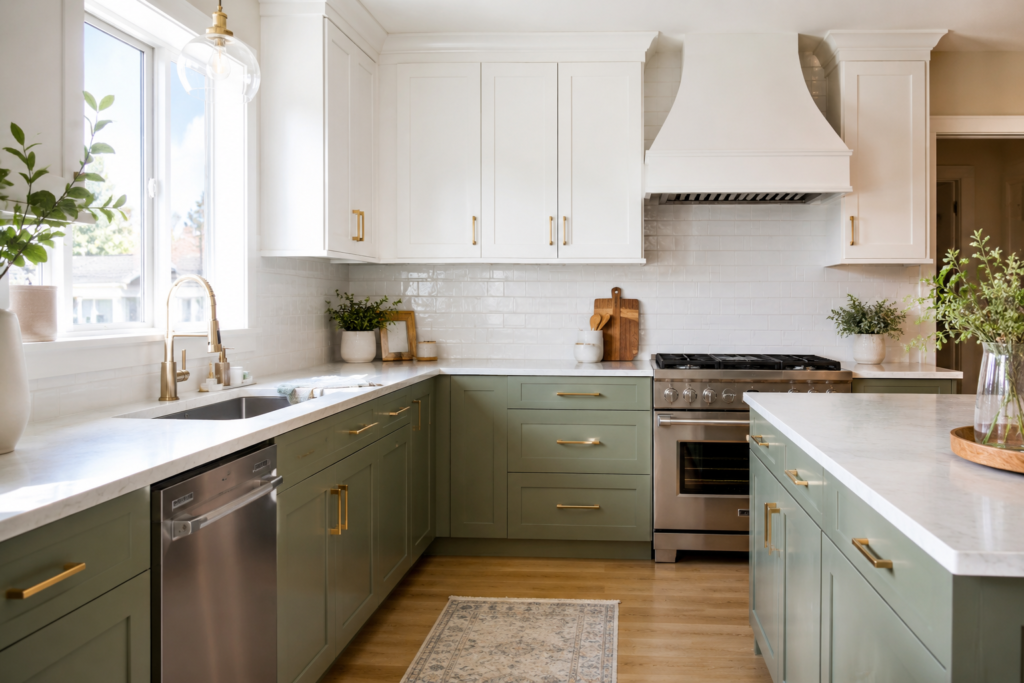
Your kitchen cabinets take up more visual space than almost anything else in the room, so when they look worn, dated, or scuffed, the whole kitchen feels tired. The good news is that you rarely need to tear everything out. In most Utah homes, one of three options will get you a fresh kitchen for far less than full replacement: cabinet painting, cabinet refinishing, or cabinet refacing.
The three terms get used interchangeably, and that leads to confusing quotes and unmet expectations. This guide explains what each one really means, what it costs you in time and money, and how to decide which fits your kitchen.
Quick Answer: Which One Should You Choose?
- Choose cabinet painting if your cabinet boxes and doors are in good shape and you want a new color, such as white, greige, or navy.
- Choose cabinet refinishing if you have quality wood cabinets and want to keep the natural grain, just with a new stain or protective finish.
- Choose cabinet refacing if you dislike the door style itself, or the doors and drawer fronts are damaged, but the cabinet frames are still solid.
- Consider replacement only if the layout doesn’t work, or the boxes are water damaged, sagging, or falling apart.
What Is Cabinet Painting?
Cabinet painting means applying an opaque color over your existing cabinets. It sounds simple, but the quality of the result depends almost entirely on preparation. A proper job includes removing doors, drawers, and hardware, degreasing every surface, sanding, repairing dings and holes, priming, and applying multiple coats of a durable cabinet-grade finish.
Professional painters usually spray the finish rather than brush or roll it, which gives a smooth, factory-like surface without visible brush marks. Drying and curing between coats is what makes the finish resistant to chipping, so rushed jobs tend to fail early.
Best for: Homeowners who want a dramatic color change on a budget, and kitchens where the cabinet structure and door style are still acceptable.
Watch out for: Painting hides the color of the wood, but it doesn’t hide the grain on open-grain woods like oak, which can show through unless it’s filled first. Painting also can’t fix bad cabinet layouts or damaged boxes.
What Is Cabinet Refinishing?
Cabinet refinishing focuses on the finish rather than the color. It usually involves stripping or heavily sanding the old finish, then applying a new stain and a protective topcoat to bring the wood back to life. Some contractors also use the word “refinishing” to describe painting, which is one reason quotes can be hard to compare, so always ask exactly what will be done.
Refinishing works best on solid wood or good-quality wood veneer cabinets. If the wood is in good condition, refinishing preserves its natural character while removing the yellowed, worn, or sticky coating that builds up over the years.
Best for: Quality wood cabinets you want to keep looking like wood, whether you prefer a lighter, warmer, or darker tone.
Watch out for: Stain can’t cover up damage or dramatic color differences, and it can’t lighten wood very much. If you want a bright white kitchen, painting is the better route.
What Is Cabinet Refacing?
Refacing is the most involved of the three, and it’s a partial replacement. The cabinet boxes stay in place. The old doors and drawer fronts are removed and replaced with new ones, and the visible frames are covered with a matching veneer or laminate. New hinges and hardware usually complete the job.
Because you’re getting new door styles, refacing changes the look of your kitchen far more than paint does. You can move from a dated raised-panel style to clean shaker or flat-panel doors, for example.
Best for: Kitchens where the layout works well but the door style is outdated, or where doors and drawer fronts are warped or damaged.
Watch out for: Refacing costs more than painting or refinishing, and it depends on your boxes being structurally sound. If the frames are water damaged or crumbling, refacing won’t hold up.
Cabinet Painting vs. Refinishing vs. Refacing at a Glance
| Factor | Painting | Refinishing | Refacing |
|---|---|---|---|
| Changes color | Yes, any color | Stain tone only | Yes, new doors and veneer |
| Changes door style | No | No | Yes |
| Keeps wood grain | Usually covered | Yes | Depends on new material |
| Relative cost | Lowest | Low to moderate | Moderate to high |
| Disruption | Moderate, doors removed | Moderate, more mess from stripping | Highest of the three |
| Best condition needed | Sound boxes and doors | Quality wood in good shape | Sound boxes, any door condition |
All three options are generally more affordable than replacing cabinets, and they avoid demolition, new countertops, and the lead times that come with custom cabinetry. Exact pricing depends on the number of doors and drawers, the finish you choose, and the condition of your existing cabinets, so get a written, itemized quote. If you’re planning a bigger project, see our budget-friendly kitchen remodeling ideas for ways to stretch your budget.
How Utah Conditions Affect Your Choice
Where you live matters when it comes to cabinet finishes. A few local factors are worth considering:
- Dry air and temperature swings. Utah’s dry climate and seasonal changes can cause wood to expand and contract. A quality finish applied over properly prepared surfaces handles this better than a rushed one, and it’s one reason prep work matters so much.
- Sun exposure. Kitchens with large south- or west-facing windows can fade stained finishes over time. A UV-resistant topcoat helps.
- Older homes and newer builds. Many newer Utah homes have builder-grade cabinets that paint well, while older homes may have solid wood that deserves refinishing.
- Busy family kitchens. High-traffic homes need a durable, washable finish, which means paying for a tougher coating rather than the cheapest paint.
If you’re deciding between the options for a Utah kitchen, our team serves the state through our Utah kitchen remodeling page.
How to Decide: 5 Questions to Ask Yourself
1. Do you like the door style? If yes, paint or refinish. If no, refacing or replacement is the answer.
2. What condition are the cabinet boxes in? Solid boxes can be painted, refinished, or refaced. Damaged boxes point to replacement.
3. Do you want to keep the wood look? Refinishing keeps it. Painting covers it.
4. What’s your timeline and tolerance for mess? Painting and refinishing are typically faster than refacing, but all three affect your kitchen for a few days to a couple of weeks.
5. What is your budget? If money is tight, painting delivers the biggest visual change per dollar. If you plan to stay in the house long term, refacing may be a better value.
Mistakes to Avoid
- Hiring on price alone. The cheapest quote usually skips prep, spraying, or curing time, and the finish shows it within a year.
- Skipping the questions. Ask whether doors will be removed, how they’re prepped, what products are used, and what warranty covers chipping and peeling.
- Ignoring hardware. New pulls and hinges are a small cost that makes a big visual difference.
- Not planning the rest of the kitchen. New cabinets can make old countertops or a dated backsplash stand out. Consider countertop installation or backsplash tiling at the same time, or a fresh coat of wall paint to pull the look together.
When Replacement Is the Better Choice
Painting, refinishing, and refacing are all cosmetic solutions. If your layout wastes space, you want an island, or the boxes are damaged, upgrading to custom cabinetry makes more sense. For help deciding whether a larger project is worth the investment, read our guide on whether a kitchen remodel is worth it.
Frequently Asked Questions
How long does cabinet painting or refinishing last?
With proper prep and a quality finish, painted or refinished cabinets can last many years. Kitchens with heavy daily use may need light touch-ups sooner.
Is refacing more expensive than painting?
Yes. Refacing includes new doors, drawer fronts, and veneer, so it costs more than painting or refinishing, but less than full replacement in most cases.
Can I paint laminate or thermofoil cabinets?
It’s possible with the right bonding primer, but results vary. Have a professional assess the surface first.
Will I be able to use my kitchen during the work?
Usually partially. Doors and drawers are typically removed for a few days, so plan on limited use and simple meals.
Do I need to empty my cabinets?
For painting, refinishing, and refacing, yes. Contents should be cleared out before work begins.
Ready to Update Your Kitchen Cabinets?
The right choice comes down to the condition of your cabinets, your style goals, and your budget. If you’re not sure which option fits your kitchen, a professional can look at your cabinets in person and give you an honest recommendation, along with an itemized quote you can compare.
Ready to get started? Request a free quote or browse all of our kitchen services to see what else we can do for your home.
Leave a Reply